Monday, February 11, 2019

Lessons Learned from the Millennials!


There have been generations slaving hard at work just waiting for the day they can retire and start having fun. Unfortunately, some never make it to that day. These younger generations, Millennials included, aren’t about to let that happen to them. They believe that life is meant to be enjoyed. They aren’t planning on wasting life working to buy material things, they are going to enjoy every moment of it.

You know, reminds me of a good Kenny Chesney song: "The Life" 

based on the old parable entitled: "The Parable of the Mexican Fisherman" 


Maybe we could all learn a lesson or two from the Younger Generation (Millenials), or the Mexican Fisherman!

Affordable housing is one of the biggest dilemmas for all Americans, especially the younger generation, including the Millennial!  The average house in Houston was $294,500 in October 2018, which means the home buyer would need a combined income of roughly $100,000, with a 3.5% down payment, or $10,308, plus closing costs and reserves - and that's if hey have great credit!  This eliminates a vast majority of home buyers in all age brackets!

So, what's a home buyer to do?  BUY AN RV!!

The younger folks, especially Millenials, have caught a lot of slack from people. Their generations are stereotyped as being lazy, unmotivated, and having a sense of entitlement. But, that’s because the media attention has been on the wrong group of younger generations & millennials. While there are some still living with their parents and working at low paying jobs with loads of student debt, there are also plenty that are paving their own path.

For those paving their paths, RV'ing seems to be the perfect fit. This generation has discovered that there is an entire world out there just waiting to be discovered and an RV will help them do just that. Over the past few years, the RV industry has seen a steady incline that they attribute to younger generations, including millennials, jumping into the market.

What they are finding:

1.  They can make money online from ANYWHERE

They have discovered that they don’t have to pick a city that fits what they are looking for in order to get a job. Thanks to modern technology there are more and more people transitioning to the life of an online freelancer. They work for themselves, create their own schedule, and all they need is a laptop and Wi-Fi. That means they can do as much traveling and exploring as they want.

2. Buying an RV is more affordable than buying a house and provides freedom

It’s true that they have waited longer than any other generation to enter the housing market. Many claim this is because they are carrying some hefty student loan debt. That makes it hard for them to save enough money for a down payment and then have enough to pay a monthly mortgage payment. But, many have found that RV'ing living is a lot more affordable than buying a starter home, and it allows them to have an adventure.

3. They don’t have to wait for retirement

They can enjoy life NOW!!!

Thanks to: YouTube, Sky River RV, Be More with Less, and Houston Business Journal for info used in this blog.

Compliments of:
Julius F Zatopek III – Broker/Owner
Zatopek Properties


Follow us on Facebook®, Twitter®, LinkedIn®, and Instagram®


Notices:


Friday, February 8, 2019

You're being Watched....and Listened to as You Tour Property!


You're being Watched....and Listened to as You Tour Property!


As smart-home technology becomes more common, real estate agents and their clients are increasingly thrown into settings where someone, somewhere, could secretly be observing them tour property listings. And while most people believe such technology is not normally used for nefarious purposes, it does raise a host of questions about ethics, legality, and privacy when it comes to listings that feature surveillance devices.  States generally have laws governing recordings but it’s a patchwork of different regulations, and few real estate agents actually know what they are. Some states require both parties must have knowledge they are being recorded; while other states only require that one person has to consent.  

Either way, many real estate agents (myself included) believe we have an ethical obligation to disclose the existence of recording technology, regardless of what the law says, to all parties.  Agents have a fiduciary duty to their clients, and making everyone involved in a sale aware of cameras is part of that duty; regardless if the law states only one party has to be aware.

It is very difficult to ask a seller not to watch or listen in to conversations, because sellers will argue that they have the right to know who is in their property, and what they are saying or doing.  And quite frankly, whether you agree or not, that is hard to argue against.

On the other hand, buyers will argue that they should be given the opportunity to preview and discuss the property in private.  Again, a very hard argument to debate.

So, agents are really in a dilemma.  However, I still believe full disclosure is best practice.  If sellers wants to watch & listen, so be it - in fact, why not just make it fun!  Wave at the cameras and tell the seller(s) Hi!  If you're feeling really bold, leave feedback via the video devices for the sellers!

With all this said, it's human nature (I guess) to ease drop on conversations or watch what's going on.  Heck, before technology advanced to this - sellers were sitting in there cars watching from down the street or their neighbors drive - and using tape recorders in their home.  WAIT!!!  They still do this!!!

Compliments of:
Julius F Zatopek III – Broker/Owner
Zatopek Properties


Follow us on Facebook®, Twitter®, LinkedIn®, and Instagram®


Notices:


Thursday, January 31, 2019

Do You Know How Much Your Home Has Increased in Value?

Do You Know How Much Your Home Has Increased in Value? | MyKCM


Last year we saw headlines about a possible housing market bubble, and many wondered if Americans still felt confident about the value of their homes. Recently, the 2018 Houzz & Home Study revealed:
Homeowners with mortgages have seen their home equity more than double since 2011, increasing to a record-setting $8.3 trillion in 2017.”
The average homeowner gained $16,200 in home equity between Q2 2017 and Q2 2018 according to the latest release of CoreLogic’s Home Equity Report.
Since 2011 home values have increased significantly throughout the country, with prices rising by 5.1% in 2018 alone. When surveyed, homeowners revealed the top four reasons why they felt their homes had increased in value.
  1. Desirable Location
  2. Improved National Economy
  3. Improved Local Economy
  4. Low Home Inventory in My Area
As we can see, not only does the data show that the homes have appreciated, but homeowners also believe they know why. Many have taken advantage of the opportunity to use their newly found equity to sell their current house and move up to their dream home!
2019 will be a good year for the homeowners that still want to take advantage of their home equity! CoreLogic forecasts that home prices will increase by 4.8% by the end of the year.

Bottom Line

If you are a homeowner who would like to find out your current home value, let’s get together to discuss the hidden opportunities in your home!

Compliments of:
Julius F Zatopek III – Broker/Owner
Zatopek Properties


Follow us on Facebook®, Twitter®, LinkedIn®, and Instagram®


Notices:

Monday, January 7, 2019

Want to Get the Most Money from The Sale of Your Home? Use These 2 Tips!

Want to Get the Most Money from The Sale of Your Home? Use These 2 Tips! | MyKCMEvery homeowner wants to make sure they maximize their financial reward when selling their home. But how do you guarantee that you receive the maximum value for your house?

Here are two keys to ensure that you get the highest price possible.
1. Price it a LITTLE LOW 
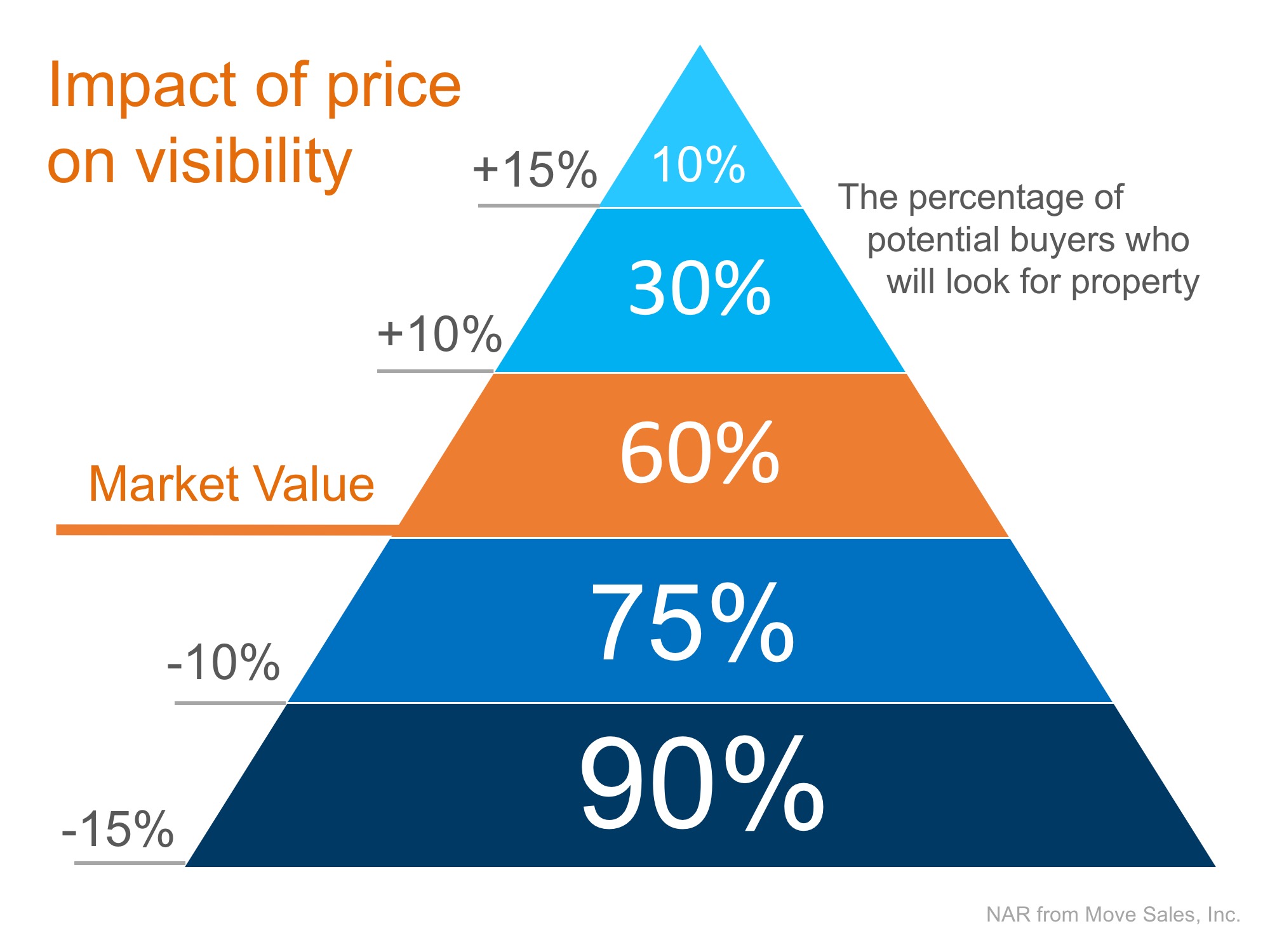
This may seem counterintuitive, but let’s look at this concept for a moment. Many homeowners think that pricing their homes a little OVER market value will leave them with room for negotiation. In actuality, this just dramatically lessens the demand for your house (see chart below).
Want to Get the Most Money from The Sale of Your Home? Use These 2 Tips! | MyKCM
Instead of the seller trying to ‘win’ the negotiation with one buyer, they should price it so that demand for the home is maximized. By doing this, the seller will not be fighting with a buyer over the price but will instead have multiple buyers fighting with each other over the house.
HGTV gives this advice:
First impressions are everything when selling your home. Studies have shown that the first two weeks on the market are the most crucial to your success. During these initial days, your home will be exposed to all active buyers.
If your price is perceived as too high, you will quickly lose this initial audience and find yourself relying only on the trickle of new buyers entering the market each day. Markets are dynamic, and your price has an expiration date. You have one chance to grab attention. Make sure your pricing helps you stand out on the shelf — in a positive way.”
2. Use a Real Estate Professional
This, too, may seem counterintuitive. The seller may believe that he or she will make more money without having to pay a real estate commission, but studies have shown that homes typically sell for more money when handled by a real estate professional.
Research by the National Association of Realtors in their 2018 Profile of Home Buyers and Sellers revealed that,
“the median selling price for all FSBO homes was $200,000 last year. However, homes that were sold with the assistance of an agent had a median selling price of $264,900 – nearly $65,000 more for the typical home sale.”

Bottom Line

Price your house at or slightly below the current market value and hire a professional. This will guarantee that you maximize the money you get for your house.

Compliments of:
Julius F Zatopek III – Broker/Owner
Zatopek Properties


Follow us on Facebook®, Twitter®, LinkedIn®, and Instagram®


Notices:

Thursday, January 3, 2019

Impact of Government Shutdown on Housing

Unless you have been living under a rock, you are probably aware of the ongoing government shutdown. If you are a non-government worker, you may think that this will have little impact on you, but the effects may be more far reaching than you think. The shutdown includes all non-essential government employees and the many departments they represent. Some of these departments are directly related to the mortgage process. If you are selling a home, your buyer could directly be affected. Furthermore, if you are buying, the process may be stalled until there is some resolution. Regardless, the government shutdown will have a negative impact on the real estate market.
Even if you aren’t applying for a government loan, your application could directly be impacted. Most lenders need verification of income and identity through the Internal Revenue Service (IRS) or the Social Security Administration to process the loan. Even though income fraud and identity theft for the purposes of a mortgage application is very rare, it does happen. Lenders that underwrite these loans would be on the hook for the entire loan amount and unable to sell in the secondary market. Because of the shutdown, many lenders are forced to decide if the risk is worth the reward in lending without these important documents. Some lenders are forging on, but at the first sign of fraud, they will no doubt stop lending all together.
The longer the shutdown continues, the more likely something will come up and cause servicers to stop lending. This will have a trickle-down effect on rate locks, approvals and ultimately closings. A buyer that may have liked the property and the price may not feel the same way in 60 or 90 days. A seller that may have needed to sell to move somewhere else may be in a holding pattern for an undetermined amount of time.
Markets can adjust for a short term shutdown, but the longer it goes on, the more unstable things get. This may cause mortgage interest rates to fluctuate or shoot up if this lingers past our debt ceiling date. This increase may deter buyers from buying or may increase debt to income ratios and loan approvals. If buyers aren’t buying, then demand is lowered and this would cause a drop in home values. It is uncertain if the economy could withstand another drop in values, considering how much it took to finally get to this point.
This is not even accounting for buyers or sellers who are directly applying for FHA or VA loans. Those are direct government loans that are underwritten by these departments. For now they are continuing approvals, but the staffs have shrunk to skeleton crews. These loans make up anywhere from 15-30% of all new home purchases. With a decreased staff, this will cause an increase in loan turnaround times. It may make sellers or buyers consider walking away from the deal instead of waiting for 60 days. That will push parties into the holidays or near the first of the year.
There is no doubt that the sooner this gets worked out, the better it would be for the mortgage and real estate market. There has been no direct impact yet, but with every passing day, there is the risk that the purchase market can stall. If that happens, the government will have its hands full with another mess.
Article published by & courtesy of: Than Merrill - https://www.thanmerrill.com/impact-government-shutdown-real-estate-market/
Compliments of:
Julius F Zatopek III – Broker/Owner
Zatopek Properties


Follow us on Facebook®, Twitter®, LinkedIn®, and Instagram®


Notices:

Thursday, December 13, 2018

Millennials are being Penalized for Good Credit Habits!


Millennials’ unconventional credit habits may change scoring models

Because millennials don’t look at credit the same way generations before them did, lenders are missing out on thousands of mortgages from well-qualified applicants.

According to the latest study by data scientists at VantageScore Solutions, a scoring model still struggling to gain acceptance by the federal agency that regulates the two secondary mortgage giants Fannie Mae and Freddie Mac, millennials have similar income and asset levels as most homebuyers, but they think about carrying credit differently.

They are more debt averse and keep their credit balances lower.  Lower, in fact, then older generations. That’s not necessarily a bad thing. But when they do have credit accounts — and many do not — they often don’t have enough to produce a credit score.

They have what’s known in the trade as “thin” credit files, or those with two or less active accounts. Those with what are considered “thick” files have three or more accounts.

Recent data produced by Vantage Score, a rival to the various and more popular FICO score most lenders use to approve or reject borrowers wanting to finance a home purchase, “shows (millennials) are writing their own story when it comes to using credit,” says the company’s president, Barrett Burns.

Conventional wisdom has it that those with more assets and higher incomes make more use of credit and have higher incomes than those with thin files. Some lenders don’t even make loans to would-be borrowers with little credit histories, while others offer them more expensive subprime-like products.

But the VantageScore research found that millennials “are anything but conventional.”

Indeed, unlike other generations, those with thin files generally have similar income and asset levels as persons with thicker files.

And in what the study calls “prudent credit management,” those with student loans “appear reluctant” to add any more debt on top of what they already are carrying. “This is smart credit behavior, not riskier,” the report maintains. And since their income and asset levels don’t translate to greater uses of credit, “they likely have the capacity to handle new credit accounts.”

Meanwhile, according to VantageScore, “older models and lending strategies penalize them simply because they haven’t opened new loan accounts.”

Among millennials with revolving accounts, the analysts also found, balances are low, about a third less than their full-file counterparts. “Thin-file millennials either cannot or will not charge up high balances on revolving accounts,” the study also concluded.

For these and other reasons, VantageScore’s Burns says conventional scoring models such as the FICO scores used by mortgage lenders — FICO has developed a score for each of the three main credit repositories, Equifax, TransUnion and Experian — may be shortchanging otherwise credit-worthy young wanna-be homebuyers.

Burns believes scoring models need to be updated periodically to “maintain their peak level of predictiveness,” he wrote in a recent company newsletter.

“Not only does the data available to modelers get better and model building techniques improve, but the mix of credit products changes, as do consumer behaviors and the way the treat their finances.”

VantageScore, which tracks rent payments, utility bills, cell phone bills and other types of credit FICO doesn’t, has some skin in this game, of course. It has been trying since 2006, when it was created by the three big repositories to compete with FICO, to get its nose in the door at Fannie and Freddie. If the two government-sponsored enterprises say they’ll accept aVantageScore score, then lenders will start using it.

But this summer, the Federal Housing Finance Agency, which not only regulates the GSEs but also has had them under conservatorship for a decade, suspended its review of new and alternative scoring models. Instead, it said it would create a regulatory framework for providers of such models to apply and be evaluated by Fannie and Freddie, themselves.

“After careful evaluation, we have determined that proceeding with efforts to reach a decision based on our Conservatorship Scorecard Initiative process and timetable would be duplicative of, and in some respects inconsistent with, the work we are mandated to do under Sec. 310 of the Act,” FHFA Director Mel Watt said in a press release at the time.

(Sec. 310 refers to a section of the regulatory reform bill signed by President Trump in May requiring the FHFA to define, through rule-making, the standards and criteria Fannie Mae and Freddie Mac will use to validate new and alternative credit scoring models.)

To say that Burns and his crew were rocked by the decision is an understatement. After all, 12 years and counting is a long time to try to gain approval. But Even FICO was let down. It has a new score — UltraFICO — that counts a consumer’s cash flow right alongside his score that it says promises to expand access to credit.

FICO is testing Ultra with Experian and data aggregator Fincity that draws on several month’s worth of data from people’s bank accounts, the idea being to create a “second chance” score, so to speak, that would give those who have been denied credit under a traditional scoring model another shot at the brass ring.

Before the regulatory reform measure passed, the FHFA had given itself a 2018 year-end deadline to decide on new scores. Now, it’s anyone’s guess when the framework under which Fannie and Freddie can test new scoring models, let alone when a new model or two will finally win approval.

As for VantageScore, it is hoping “we’ll finally get there” in 2021, if then, says spokesman Jeff Richardson.

Meanwhile, Burns, while saying his firm “looks forward” to working with the FHFA and the GSEs, could not hide his disappointment. “With every day that passes,” he said, “mortgage applicants are mispriced, locked out and discouraged from pursuing homeownership.”

Article written by: LEW SICHELMAN
Published December 11, 2018 in INMAN NEWS
Lew Sichelman is a seasoned writer with 50 years of covering the housing and mortgage markets under his belt. His biweekly Inman column publishes on Tuesdays.

Compliments of:

Julius F Zatopek III

Licensed Texas Real Estate Broker

Follow us on Facebook®, Twitter®, LinkedIn®, and Instagram®


Notices:

Monday, December 10, 2018

Experience Matters! - "Exceeding Expectations - Results with Integrity"


  • When it comes to one of the largest financial decisions you will most likely make - wouldn't you rather put your fate into someone who has experience and is highly rated & recommended by past clients?
  • When it comes to selling or buying a home, you need someone who is on your side.  Someone who will put their personal financial gain second to your best interest.
  • Sure, everyone needs a start.  New agents have the opportunity to team up with experienced agents to learn and gain the knowledge needed to handle a legal binding agreement that involves several thousands or your dollars!

Click here to see my ratings & reviews as an experienced broker for 20+ years!

Please give me a call (281) 342-1997 or send me an email if I can help in any way!

Compliments of:

Julius F Zatopek III

Licensed Texas Real Estate Broker